
Head Strength and Conditioning Coach Mike Donoghue on How the Dallas Stars Plan to Stay in Shape during (and after) the Olympic Break
"In my field, your body's your business card"

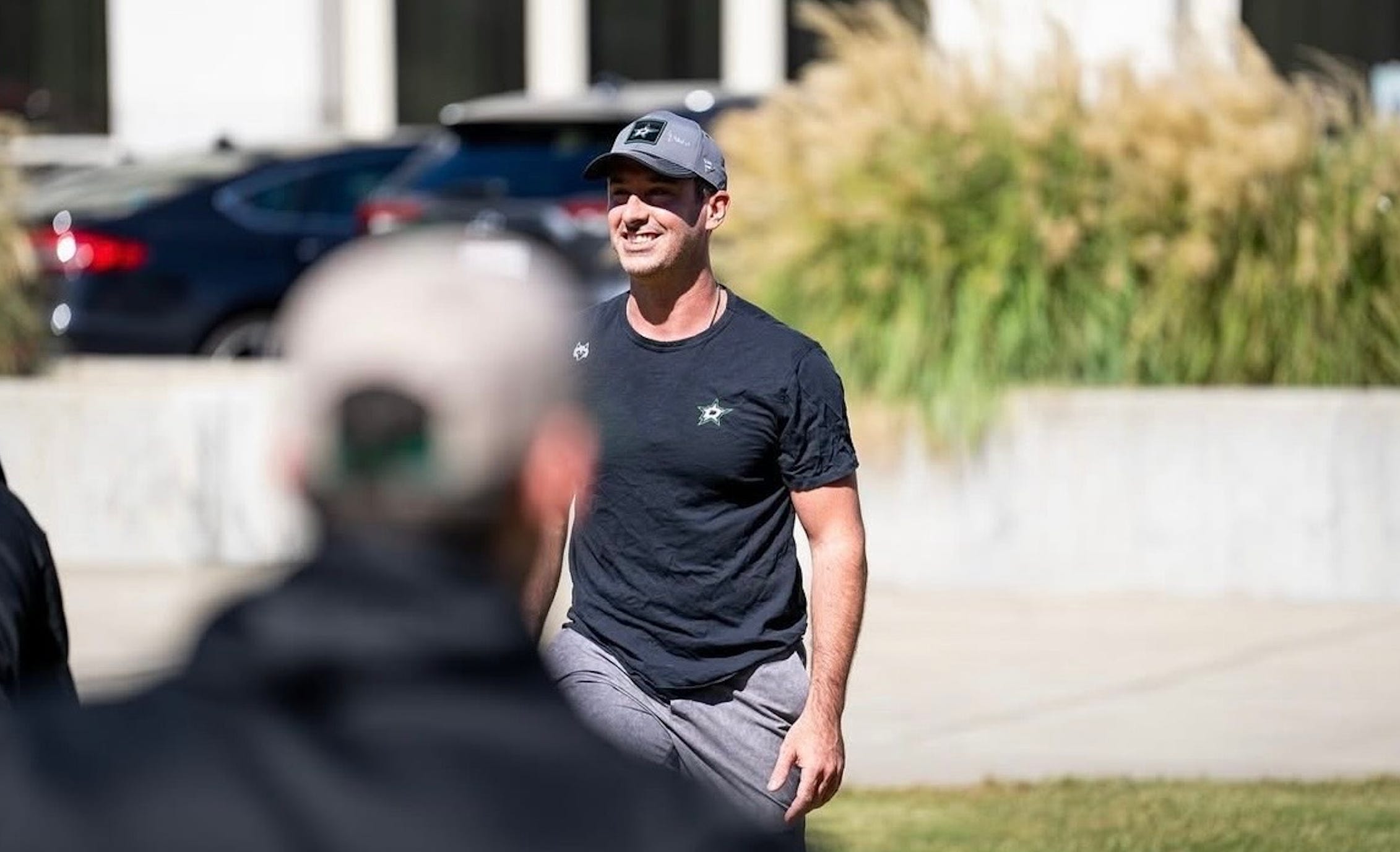
Today marks the beginning of the Men’s hockey tournament of the 2026 Winter Olympic Games. Seven different Dallas Stars players are currently in Italy with their national teams, and they will doubtless be glad to get back into action today and tomorrow, after going a week since their last NHL game.
However, while those seven players have been continuing to work out and stay in shape with their countrymen, the rest of their Stars teammates have scattered to the four winds. Some are in Cabo or other tropical destinations, while others are spending time with family until next week, when all non-Olympians will return to Dallas and begin a mini training camp for about a week before the NHL season resumes on February 25th.
That’s where Mike Donoghue comes in. Since 2023, Donoghue has been the Stars’ head strength and conditioning coach, and longtime Stars Thoughts readers will remember Donoghue’s comprehensive plan to address the Stars’ jetlag during their trip to Finland last season.
This year’s Olympic break presents its own set of challenges when it comes to keeping everyone in the best possible position to prepare for the end of the NHL regular season, as well as the playoffs. So to learn more about those challenges, I chatted with Donoghue last week before the Stars went on break.
Donoghue graciously answered a slew of questions about exactly how the Stars are approaching the big pause in the season, as well as how they look for competitive advantages within those approaches. (He also very kindly did not ask me about the details of my own workout plans, which I appreciated.) Donoghue is earnest, high-energy, and always upbeat. In any conversation, you can easily see how his energy would be infectious in a room full of elite athletes.
Our conversation touched on a few different things, including what the Stars learned from the Four Nations break last February, how much he keeps in touch with players while they’re on vacation, and how important it is for him to stick to his own conditioning plans.
I hope you learn a few things from it, because I certainly did.
(Note: The below conversation has been very lightly edited for clarity.)
Stars Thoughts (ST): What’s the first thing that came to your mind about, ‘How do we prep for this break?’
Mike Donoghue: I think emotionally, guys are excited about a break to some degree. I know it’s like, the dog days of January and February. I’ve always rushed through that. It’s a battle at times, physically and mentally. So I think anytime there’s a chance to catch your breath and have a little bit of a break, it’s exciting. And then the second thing right away, is like, okay, how do we optimize it?
Anytime you hear ‘break in a schedule,’ you want to leverage an advantage at all times. How can I get my guys better than the next group, where maybe you get a leg up? So it’s always like, getting a few extra reps or getting your extra touches on the ice. You think of how you optimize it.
So you kind of go from square one. You say, okay, what can we do that still respects some time away from a team’s competition schedule, but at the same time, provides enough training stimulus to maximize the time off? Do we train? Do we recover? Like, what is that established context?
And that’s something that, from our standpoint, our department’s trying to do that all year ‘round. We want our guys to be self advocates. We want them to be really good at managing their bodies, understanding the process of training, and why we do it. And if they have that really good knowledge, it’s easier to get buy-in to show them how to optimize, right?
So it’s creating advocacy early, so that when the break comes, guys are saying, ‘Okay, what am I doing?’ It’s not ‘Hang the skates up and see you in 12 days.’
They’re gonna find ways to have time off, and downtime. But we just call it planned downtime. So it’s part of the program, as far as how they think about it, and then that helps accelerate back into the training mode, too. So with the break, guys will have their downtime, and that’s exciting. The competition schedule is so dense, that you don’t realize how much the players are dealing with little injuries. No one’s 100% every night, right?
So, giving an opportunity for guys to sort of take a breather, and then optimize that time, is kind of what our guys are thinking about.
ST: Does that translate to individual plans for each guy, day-by-day? How granular is it?
Donoghue: From our from our club’s perspective, there are strict policies as to exactly what we can go ahead and implement. We’re not able to work with them one-on-one, off-site. There’s different rules and restrictions. But every player is taking ownership of their plan. Some guys are really granular, and they’re almost running us through what their time off looks like. And then we’re kind of advising areas of what could be a good day for this, or this, or this. Kind of picking those spots for them.
So, general themes is what we’re trying to get them to understand. Like, ‘This is our three days of downtime,’ or ‘This would be a day that we could push,’ or ‘This would be a day that we would skate, or not skate.’
Some guys are gonna go home, and they’re gonna go rent ice. They’re gonna go skate with guys. This league doesn’t provide a time where you can’t be at your best. So because of that, on any break, no one’s putting their feet up and just saying, ‘Get away from the rink,’ right? So that’s a big aspect to it, for sure.
ST: Did you guys learn anything from last February [during the Four Nations break] that altered how you’re approaching this break, or things that you want to optimize more?
Donoghue: I think you learn every year from things like that. But I think ultimately, you understand what the Four Nations was for a group. So you can kind of display like, from a team standpoint, each country’s gonna have their style. And you’d better understand what to expect from that side, with the elite guys that are going.
Then you just learn mentally, on a break, how you can optimize it, right? So you learned, okay, this worked, this didn’t work. This player came back with great results, or this player followed a plan and maybe didn’t get the best results. Maybe too much rest is also a bad thing.
So we’re trying to just balance on what individuals’ needs are, based on how they responded to last year’s plan.
ST: When everyone does come back, you start kind of a mini training camp again. Gulutzan mentioned that it’s a little trickier because you don’t have a full group, but in terms of individual strength and conditioning, is that pretty exciting for you guys that you’ll almost have a chance to slowly, or however quickly, get people back into shape?
Donoghue: You know, it won’t feel like you’re out of touch that long, right? It is that long, but it won’t feel like it.
The good thing is that, when the guys come back, the way our program’s structured now, there’s a lot of individual tendencies that we have already programmed. So it’s easy to kind of pick guys up and really put some magnifying glasses on some individual needs.
When you have smaller groups, you know, our staff doesn’t change size. So it’s a little bit better touches with guys, and they’re not so tied to the competition schedule with skating, that you can do a little bit more work on their bodies to optimize them when they come back.
So, I think that’s kind of how we treat it from an individual standpoint. There’s more time with each guy.
ST: For you personally, is that time gonna be a little bit tough, not having that kind of daily rhythm of knowing where everyone’s at? Like in the back of your mind, is it gonna be tough not to be worried about that?
Donoghue: I’m like a big energy guy amongst the group. Like, I find myself kind of being in a good spot of bringing in really good, positive energy. A ‘what you give is what you get’ kind of thing, too.
So, I think it’s good for every large group to kind of separate a little bit. But the text messaging and the communication probably is still gonna be there to some degree. And if it’s not, that break is probably warranted, too. Like, these guys hear my voice a ton. So they might not want to hear me talk, which is great, too. (laughs)
Every day, you’re lucky to be here. I’m sure there’s a numerous amount of strength coaches that are qualified, that want to be in my shoes, too. So I’ll be taking my time to read books and try to learn what’s out there, and stay sharp. You know, bring that back. And that’s, I think, something that’s always progressive in the field. Like, you’ve always got to be on the cutting edge. So, spending a little bit of time doing that is really helpful.
ST: Speaking of those things, how have you changed as a coach compared to maybe a few years ago?
Donoghue: Yeah, there’s so much. Honestly, a lot of it comes down to the communication and the logistics of what you do.
You know, my first year, I was in the AHL, then I went to the NHL for three seasons, then back to the AHL. And then back to the NHL.
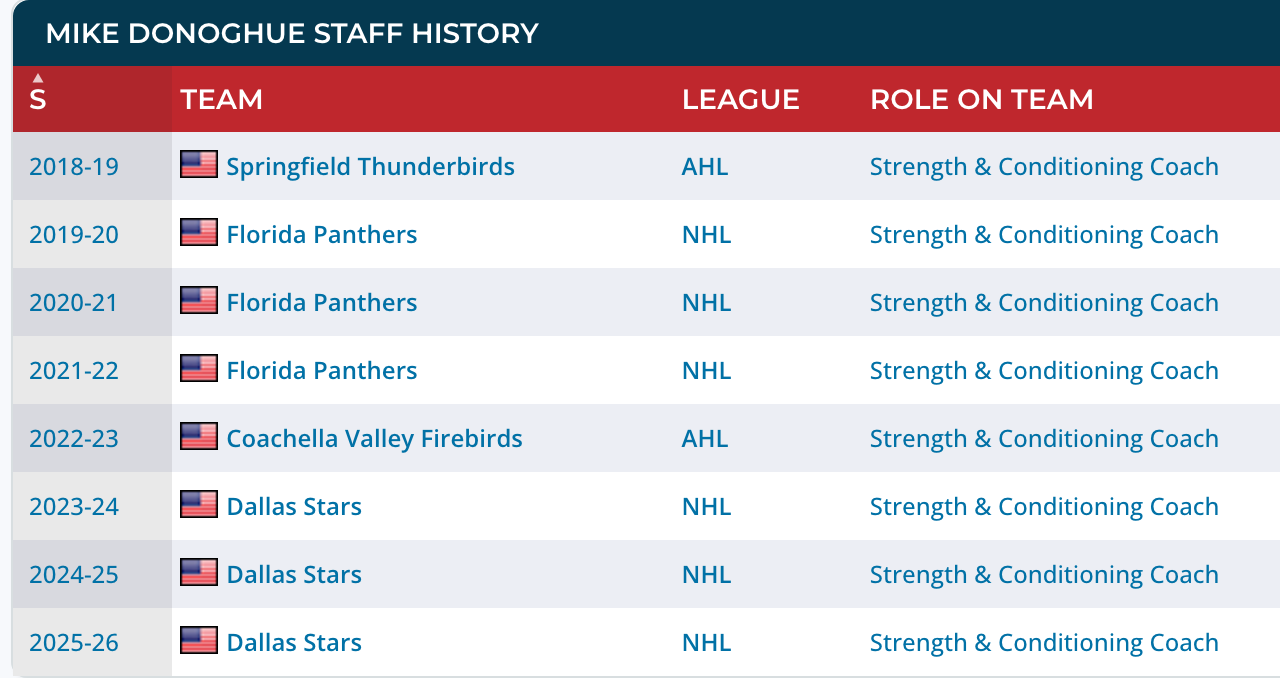
So, every time you go somewhere, you learn all these new things and skill sets and how to communicate, what your plan is, how you implement it, how you integrate, right? That a big thing now. There’s more chefs [in the kitchen]. So, how do you integrate them all?
And then it’s like, the guys still work out for ‘X’ amount. Like, if it’s a 30-minute workout, that’s what you’ve got. You can only do so much. So, you know, you optimize those areas and make sure the communication’s key. But yeah, every year, you find things that you look back, and you’re like, ‘What was I thinking?’ (laughs)
Whether that’s through communication, whether that’s too much volume, not enough. How you do that, and what you prioritize, is important. And then you just try every year to trim the fat, eliminate things that aren’t productive or conducive to better players.
And I think that’s a huge advantage when you can look in the mirror, do a full eval, and audit yourself. It’s really valuable, right? So the break gives you a little bit of time to do that.
I’ve had conversations with every guy. And the question that comes up is, ‘How do we optimize you so that in April, you’re the best possible player for our club?’ So everything is directed to, ‘How do you get them optimized for that?’ So it gets more meaningful as it goes on.
ST: Last thing. People talk about how doctors and coaches sometimes aren’t always the best at following their own advice. Do you ever find yourself overworking when you tell guys to pace themselves? Do you have something where you struggle sometimes to take your own advice?
Donoghue: You know what? I’m lucky to be around a lot of good people. And I think in my field, your body’s your business card. So, I don’t miss training that much.
I try to eat clean around the guys, and in life in general. So I try not to get away from it. But at the same time, you always feel better when you’re in good routines. So if you’re doing too much with the travel, and our schedule is really hard, you’re not your best, right?
So I think, from my standpoint, I’m just trying to be my best version of myself every day. And then shed that to, you know, to Terry1 to Troy2 to everybody. And when everyone collectively is at their best from a staff standpoint, sometimes you gotta work out hard as a group, and it levels the playing field, right? So you feel good, too.
For sure, you gotta follow your own script. It’s really hard to give instructions and not be following that path. And there’s times in my career where I’ve drifted away from it, and every time I look back, it’s like cheating yourself. That’s the biggest thing I find. Like, you can’t negotiate with yourself. That’s the big plan. No negotiating. You get done with practice, I don’t want to go train, but I don’t negotiate. It’s on the board. A little discipline.
If you’d like to hear more from Donoghue, this podcast with Anthony Donskov from a couple years ago is a good listen, too.
Terrance McLellan, Assistant Strength and Conditioning Coach
Troy Van Biezen, Director, Sports Performance