
Glen Gulutzan on Returning to Dallas, Finding Joy, and Keeping Himself Moving
The new (older) Gulutzan is not the old (younger) Gulutzan

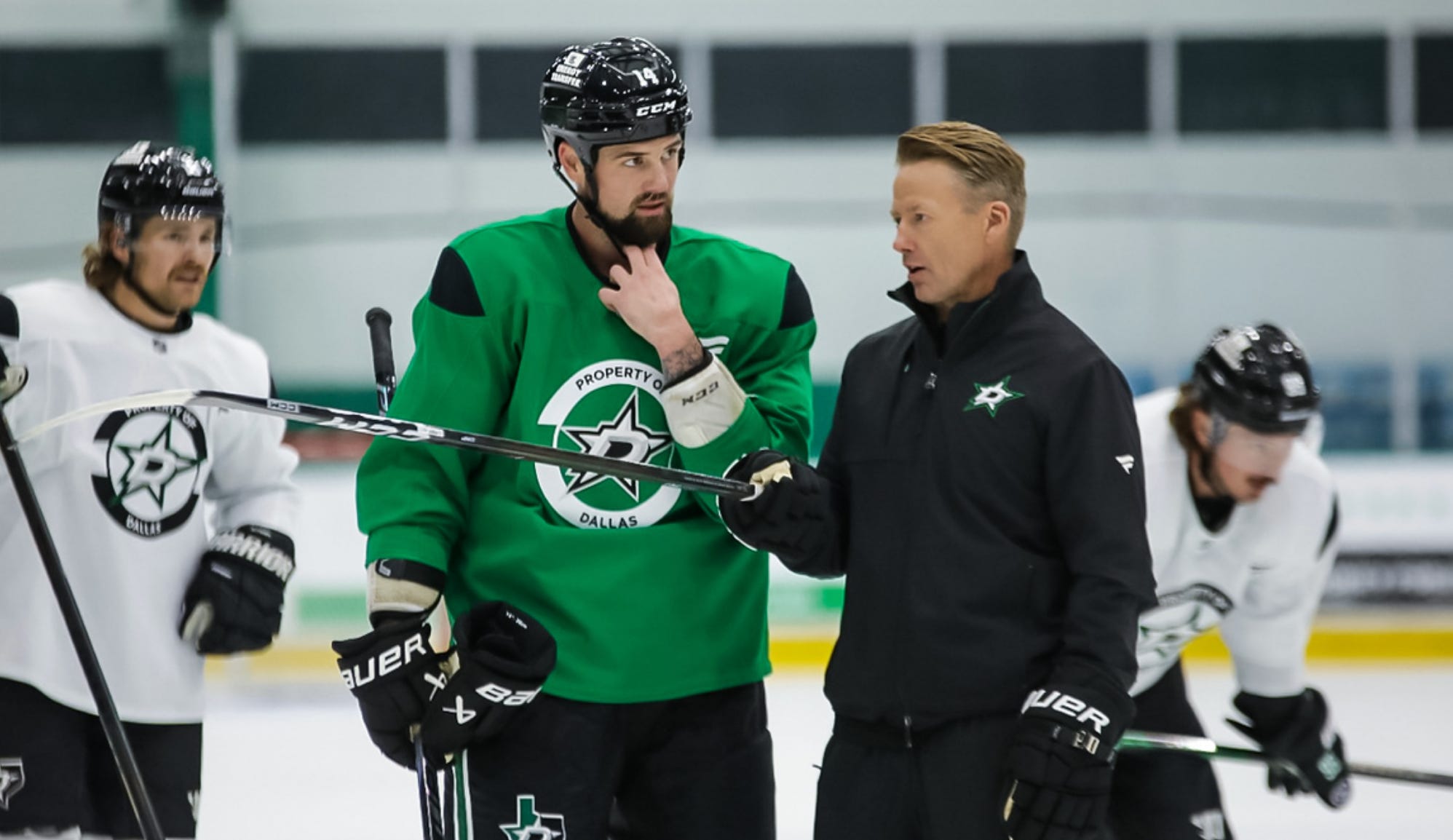
The Dallas Stars open the 2025-26 regular season tonight in Winnipeg. A lot of the team looks the same as it did last year, with one exception: behind the bench.
Glen Gulutzan was brought back Dallas by the same GM who fired him way back in 2013, and the Stars will begin their pursuit of a fourth deep playoff run in as many years with a new-but-familiar face at the helm.
I had a chance to sit down with Gulutzan earlier this week, and he reflected on his journey to and from Dallas, as well as a couple other stops along the way. He even revealed how another coach actually advised him against taking that first coaching job in Dallas back in 2011.
You can read our entire conversation below, but two things before we get to that.
First: from the moment the Stars re-introduced Glen Gulutzan in July, one thing has remained clear, whether he’s speaking to cameras from a podium at a press conference or chatting with you across a desk: He’s happy to be back here again, but he’s not just happy to be here, this time. As you’ll hear him say, he knows exactly how good this team is, and how close they are to winning it all. It is all about getting the team that little bit further than they’ve been able to get in the last three years.
Second: Pete DeBoer’s final game with the Stars culminated in an explosive moment in Game 5 (against Gulutzan’s Oilers). DeBoer himself described the moment when he pulled Jake Oettinger as “a scattergun of anger, of bitterness,” and Jim Nill has said that how DeBoer handled the aftermath of that decision was “a factor” (albeit not the only one) in his decision to move on from DeBoer.
So, when Gulutzan and I first sat down in an office in Frisco this week, the first thing I was curious about was: How has Gulutzan learned to handle the enormous pressure found in the sorts of playoff games Dallas is hoping to be back in next spring?
Q: How have you learned how to decompress, whether it’s after a crazy playoff game or as you get amped up for opening night? What keeps you as even-keel as possible during the ride of the season?
Glen Gulutzan: I’ve learned to become a walker after games. As simple as it sounds, I like to walk and get my thoughts together. And even before games, I’ll ride the bike, or I’ll do a little workout just to kind of clear the head. I think that’s been my biggest savior, basically keeping myself moving.
It helps you. Sometimes if you want to change your state, you’ve got to move, right? So that’s what I’ve done. I try to keep myself moving. I compartmentalize as much as I can too, but you know, you get in Stanley Cup Playoff games and it’s a lot, right? It’s a lot. Especially the buildup. The buildup’s a lot. The games aren’t a lot, it’s the buildup that’s a lot.
Q: Thinking back to that first time in Dallas, if there’s one thing you could tell yourself at that point, one bit of wisdom you would love to give your younger self, what would it be?
It’s so hard to go back and talk to that guy, because he was so green. So there’s almost nothing I would tell him. But I will splinter off from that question and say, I did have a coach—that I won’t name—who was a friend of mine, a good friend of mine. And when I was offered this job, he asked me, “Are you sure you want to take it?”
And I thought he was crazy. I thought he was crazy. And he started to walk me through, “It’s an older team. The team is financially, you know, You’re building yourself a resume as a young guy. Do you want to take it?” I thought he was absolutely crazy. Of course I’m taking it, right?
But I can see now, 15 years ago, what he was thinking. He was a veteran coach. But this is the National Hockey League. There’s probably nothing I would tell myself. If you get a job here, you got to take it. One thing I would have said to myself, I guess, would be, “Hey, just do you, be you, and figure it out as you go.” There’s some things you didn’t know when you’re young.
Q: In that same vein, is there a particular piece of coaching wisdom that you’ve either picked up over the years or been told explicitly or just kind of learned? You’ve talked about “road hockey” and a lot of things that undergird your philosophy as a coach, but I’m curious if there’s one piece of wisdom or guidance that you got, or you picked up at some point that has really stuck with you.
One thing that was said, that’s kind of stuck with me for a couple of years now, was basically asking yourself the question, “What what kind of coach are you? What kind of coach do you want to be?”
And I think that question has helped me just kind of remind myself that I need to be myself, right? And then, what drives you as a coach? I mean, every coach has drills. I got this drill, and that, this drill for that, and that drill for that.
But that’s not what coaching is. There’s an art to coaching, and you gotta ask yourself: What’s your strength? What kind of coach do you want to be?
So for me, that was the question. What kind of coach do I want to be? And I think that’s helped me clarify it a little bit, as a coach, [my] style, right?
When you’re a young guy and you’re thrust into the league, sometimes people want you to be a certain thing. But you have to be you. And that has helped me. What kind of coach do I want to be, and what kind of coach am I? And just work to your personal strengths.
That’s helped me. Right now, I can tell you, I’m not trying to be anybody else’s coach.
Q: What would you want a player who plays for you to say, when they’re asked, “What was it like playing for Glen Gulutzan?” What would you hope they would say?
I would love for them to say, “We were prepared, he was smart, and I loved playing for him. I enjoyed the game, playing for him.” That’s what you want.
I mean, I think that’s what you want even if you’re coaching kids soccer. You want the kids to love it, to enjoy playing for you.
You know, I could answer that a hundred different ways. I could say to you, “Well, he was honest with me.” Well, that’s all part of it. A player, if they love playing for you, it’s because you’ve been honest with them, you’ve treated them well, you’ve helped them learn, you’ve helped them get ahead. I guess that’s what I want to say.
Q: After two years of getting so close, as you did in Edmonton, was it tough to leave those guys after all that you accomplished while you were there?
Very hard. I think, it goes back to wanting players to say, “I loved playing for him.”
I like the players. I’ve coached for a long time now. I’ve enjoyed every player at every level that I’ve coached, in some way, shape, or form. I’m more of a people person, right? I enjoy that part of it.
And when you make connections—real connections with people—it’s hard to leave. No matter if you’re going on a family holiday, or visiting your cousins, or you got some good close friends. It’s hard to leave, because you make connections with people.
Now, I’m not going to lose connections with them, but we’re on the other side of it. When you have those connections with good buddies and your friends, then you start competing against each other, [now] you want to beat them a little bit more now. So that’s all part of it. But yeah, it wasn’t easy. Those young men, now they’re [having] kids and families. And you know, you’ve been in the trenches with them from losing, to almost winning, to the heartache, to the successes. It’s never easy to leave them.
But I’m very glad I’m here, because I’m starting that new chapter with these guys, right? And in some ways, you know, having ‘Benny’ here and a guy that you went through that with, has been good for me.
Q: Connor McDavid’s been in the news a bit this week. Were you personally surprised when you heard the news about him re-signing in the way he did, or does that fit with the McDavid that you got to know?
I’ve been telling everybody here, that’s what he’s gonna do. And the people have said, “Oh, he’s going to want that 17 million or whatever,” I’m like, “Not a chance. There’s not a chance.”
And I don’t want to be one of those guys, but I’ve been around that young man, and his actions tell what he’s about, right? So I knew it wasn’t about dough. He was gonna take way under market just to make sure that they could add another player or two. That’s what he was going to do.
Q: Back to Dallas, what makes you believe that this team can take that final step and go all the way?
So many good players. You need the players to win. Let’s just say that. You need the players to win, and they have so many good players in so many areas. I already have the job1, but I just think the roster is constructed so well, so many options at center, guys that can play multiple positions. The defense is strong, you’ve got goaltending.
You’re strong up the middle. You’re a little bit of a volcano, right? Back end, up the middle, and then guys that can come in and play up the middle for depth. I just think it’s a well-constructed [team]. That’s one.
Two is, again, I said so many good players, but so many players here can contribute, can score without a lot of [chances]. They don’t need to have 50 chances to score. They can quick-strike score on you.
One thing we do have to manage here is not just being a counter-punch team. I want us to pour it onto people a little bit, and that’s the one degree I’m talking about. But that’s what I like, just the construction and how dangerous of players we have.
Now, if we can add in some of that territory that I’ve been talking about in the interior, and the 1%, that really excites me. Actually, I just had that conversation with my coaches this morning, that this is what really, really excites me about this team. Not all teams have this, I can tell you.
Q: Going back really far to Fresno, playing and coaching. [Note: Gulutzan’s first coaching job was with the Fresno Falcons of the defunct WCHL] I talked to Neil Graham a little bit about spending time as a player-coach, and that transition. What do you remember from that point in your life?
It was a great experience. It was a Reggie Dunlop experience, right, from Slap Shot? You know, it was great. I got to play, but basically, back in that time, you didn’t do much coaching. The player-assistant was basically the guy who planned the road trips, recruited in the summer, did the immigration, if there were any apartments that needed to be moved around.
You basically tried to put out as many little fires as you could before the coach got ‘em. It was basically a two-man show, right? It was a one-man show with the coach, but then you became the other guy that tried to manage the room and everything.
So what I do remember most is it gave you the ability to—it wasn’t easy—but walk that line between almost coach, management, and player. But everything you kind of did then, when you sat in that position, was for the betterment of the group, the benefit of the coach, the benefit of the players.
So it was quite a unique experience to have that, because you learned, you know, a lot of dressing room dynamics, and how to handle all that stuff. It was a good learning curve.
Q: Speaking of the dressing room, is there a player or two in Dallas that you had one perception of from the outside, and as you’ve gotten to know them in this room now, you’ve learned things that surprised you about them?
No, not really. I’ve heard good things about everyone. When you get to see Miro up close, you think, “What a great player.” And you see Harls, and you think, “Geez, I didn’t realize he was that big, that smooth.” You know, you start to see things like that.
Seggy’s been a great help for a coach as far as, you know, as a veteran guy, him and Dutchy [Matt Duchene] just kind of getting you the lay of the land. That’s important for a coach, when you have veteran guys that’ve been around that long.
Obviously Benny, you know, but guys that I didn’t have a relationship with, certainly, those guys stick out. Then, there’s little things about Rants [Mikko Rantanen], what a worker he is, and how cerebral Robo is. And you know what? Johnny [Wyatt Johnston] is a young player, so I’ve seen him, but how slick this guy is…just all the little things that come up on a daily basis with these guys that you’re picking out some of the finer points that you didn’t see.
You saw the macro when you were coaching against them, but now you see the micro and their personalities. We have a great group. I didn’t realize how good of a group it is.
Q: Jim Nill, coming back around and coaching for him, sort of a second time, what has it been like, after initially getting to know him very briefly, what’s it been like, coming back and re-establishing that relationship?
Yeah, we don’t even talk about [2013]. We were together such a brief time, right? I think it was the last game when he got announced or something, so then we kind of got to know each other.
But it’s easy with Jim because he’s such a great man. And I’ve been in the league now for 14 years, and he’s been here [in Dallas] for 12, I think. He has such a great reputation of being just a solid, honest, hardworking guy. Over the years, when you run into each other, you just can’t help but have respect for the man, right?
I always did, and even the way he handled me when he came in as GM, he was very good to me. So at the end of the day, it’s been nice to kind of walk away from here 12 years ago, knowing there was a really good guy coming in. I couldn’t be a part of that2, but now to come back and reconnect with Jim, it’s been really, I want to say rewarding, but it’s been fulfilling, to be honest.
When I walked away, I thought, “Oh man, they’re changing uniforms, Tom [Gaglardi] is getting fully involved with the team, and everything’s on the rise. And I’m on my way out.” But it’s nice to come back in and see what they did.
It’s nice to work with Jim. He’s just a good man, and his wisdom…I’ve worked for other guys, you know, kind of cut from the same cloth. But his wisdom, for me, is very helpful as a coach. Been through a lot, seen a lot, can give you some good advice.
Q: Last one. Jon Cooper last year talked about how the Four Nations break was special because the season is such a grind, a sort of Groundhog Day where you get up, do the same thing, you’re in a different city, do the same thing. Do you just kind of have to embrace that grind, or have you found a way to kind of break yourself out of that routine? What have you learned about that, as a veteran coach in this league?
The key for me is just going back almost to your first question. I’m not going to say “making me move,” but I kind of answered it out there. There has to be some sort of joy in the grind. There has to be.
You have to find some sort of release, or you have to enjoy the people you’re around. You have to go out for dinner and have some laughs, catch a movie, live music, or go to a show.
You need to build joy into that grind. because it is a grind, it is Groundhog Day. It’s the same thing, you know, rinse, lather, repeat every day. It’s either game day, or non-game day. That’s how it is. You have to build some joy into that, you really do. Otherwise it can be very hard. And it’s hard enough already.
I understood this as Gulutzan saying that he already has the job, so he doesn’t have to praise the team in order to win anyone over in an interview setting; he genuinely believes the team is that good.
I’m sure it’s obvious, but just to avoid any miscontruals here: Gulutzan is saying he “couldn’t be a part of that” because he had been fired, not because he wouldn’t have wanted to be part of it.
Good lord I am so ready for this season to get going to watch this guy manage this team. Every time I read an interview with Gulutzan, I want to run through a wall for him. I hope the players feel that too.
Anyway, thanks for doing this. Just amazing work. Now let's watch our guys take it to the Jets!
It’s here! New season, new coach (great interview!!!) some new lines?, and a few new faces on the ice.
Let the adventure begin!
We made it thru the long summer with help from you, David C and Sean S.
Thanks again!