
Two Things We Learned from Another Pacific Division Victory in the Western Conference Final
Once again, the Pacific Division will be heading to the Stanley Cup Final

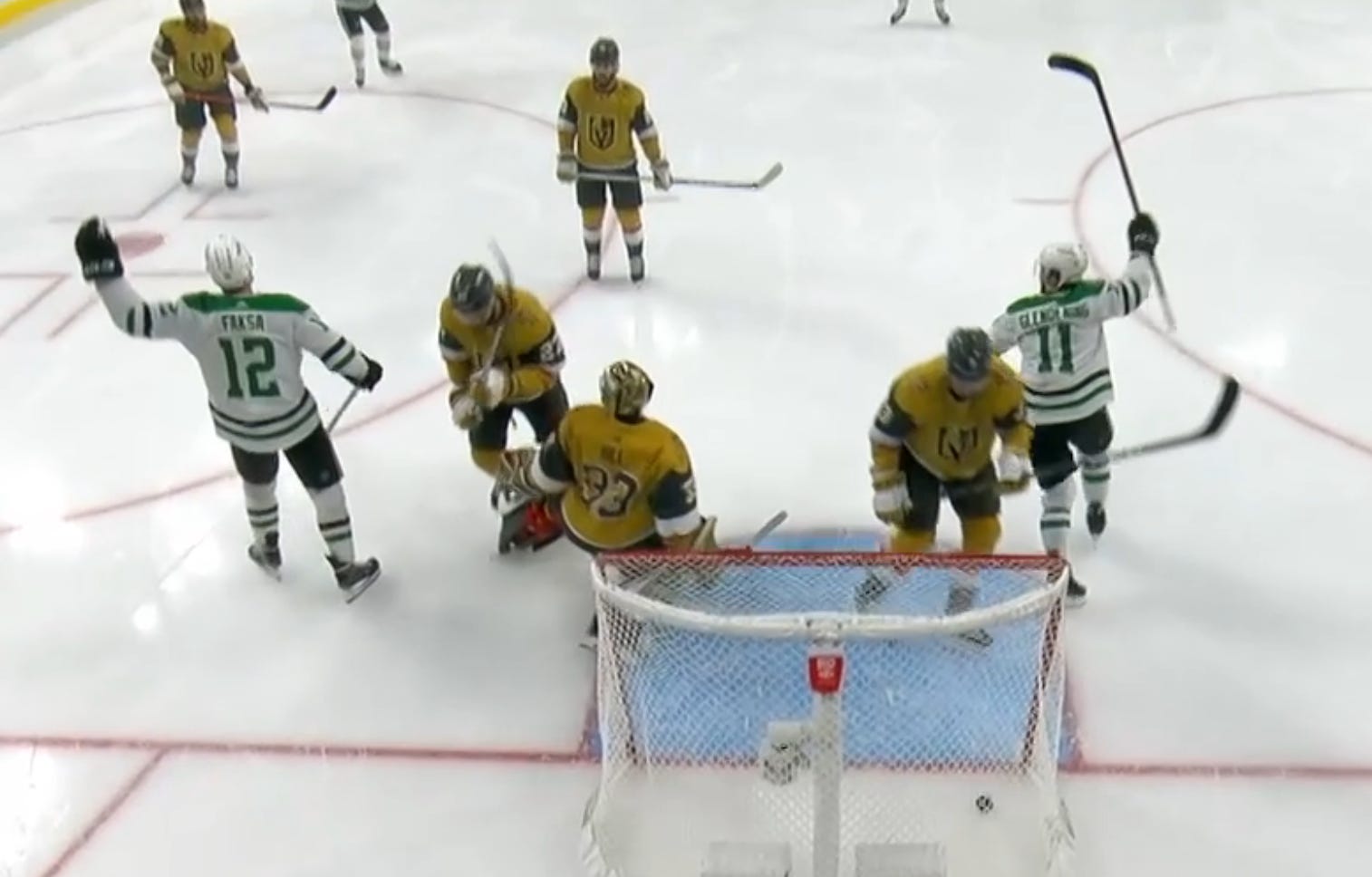
Colorado will be having to answer some version of all the same questions Dallas did last year after falling to Edmonton in rather lifeless fashion in a too-short Western Conference final.
It’s absurd on the one hand, because Colorado was the best team in the league from start to finish this year. They were outstanding defensively and offensively, and they looked as terrifying as any hockey team in recent memory when they were on their game, which was most nights.
But getting swept by a 95-point team—even one that was clearly a bit of a Smurf in Vegas—will force even the most confident Presidents’ Trophy team into some self-reflection. Every game was close, but the sum of the four games was about as disappointing as a series can get. And despite the fact that this loss came two rounds later than last year’s Mikko Rantanen Revenge Tour, it feels like more change will be coming this time.
But we’re not here to dissect Colorado. Instead, let’s look at what we learned after Vegas Got Away With It, Yet Again.
The regular season doesn’t matter, with one caveat
Jim Nill made a point in his end-of-season media availability to say that he didn’t think the NHL playoff format rewarded Presidents’ Trophy-winning teams enough.
He’s right, obviously. Finishing at the top of the heap after the grind of 82 (now 84!) games across six months deserves something more than a mere seeding and home-ice advantage. The current NHL playoff format doesn’t reward top teams the way baseball or football does, where lower-ranked teams have additional Wild Card rounds and such to get through, and it probably should. The divisional playoff format exacerbates this problem even further, as teams in weaker divisions get to play their first two rounds against lesser teams before facing whoever survived the other division in their conference.
In other words: it’s a travesty that Vegas finished with 95 points1 and got an easier road through the playoffs than Colorado. In terms of overall league standings, Vegas only had to face Utah (15th) and Anaheim (18th) in their first two rounds, while Colorado got to open against Los Angeles (20th) before facing either Dallas (3rd) or Minnesota (7th).
Despite finishing 13th in the NHL, and with fewer regulation wins than the Blues and Panthers, Vegas was guaranteed to play its first two rounds of the postseason against two of Edmonton, Anaheim, or Utah. Playing in a weaker division is unquestionably a bigger playoff advantage than being the best team in the NHL, and that cheapens (if not outright invalidates) the grind put into the regular season.
Any Stars fans is well aware of this, after the Stars finished one point shy of the Presidents’ Trophy in 2024, only to be “rewarded” with a grueling first-round series against a “Wild Card” team that also happened to be the reigning Stanley Cup champions: the Vegas Golden Knights.
You’ll hear a lot of people talk about how Vegas has “learned” how not to expend too much effort in the regular season, and you can’t really argue with the results of their approach, right? They just get into the playoffs, and then they deploy their real arsenal to often devastating effect.
There’s merit to that argument, albeit less so after the LTIR rules were changed this season. But really, the biggest factor in Vegas’s ability to “just get in” hasn’t been their own savvy or strategy or willingness not to try to win the division. In actuality, they’ve just benefited from how utterly lousy the Pacific Division has been.
Here’s an eye chart, but take a look at where Vegas has finished over the last four years:
Keep reading with a 7-day free trial
Subscribe to Stars Thoughts to keep reading this post and get 7 days of free access to the full post archives.