
Quick Olympic Thoughts: Tiebreaking Scenarios Abound after Sweden Stumbles Against Slovakia, Finland Trounces Italy in Final Day of Group B Drama
Who wants to hear about some convoluted procedures?

If you got up early on Saturday, you were treated to a fantastic game between Sweden and Slovakia that ended in a 5-3 win for Sweden. But despite the victory, the final horn saw Slovakia doing all of the celebrating.
You might have been confused by that if you were watching the U.S. broadcast of the game, however, because the broadcast incorrectly (or at least insufficiently) described the tiebreaking procedures in the preliminary/group stage of the tournament. But the truth of the matter is that a late slashing penalty by Lucas Raymond with Sweden leading 5-2 gave Slovakia a critical opportunity to add a final goal, and they did just that when Dalibor Dvorsky made it 5-3.
It was a foolish choice from Raymond, given how tightly the officials had called retaliatory slashes and hits earlier in that same third period. Tomas Tatar sold the call well to ensure the power play, and hard work at the netfront led to a dramatic Slovakia goal Sweden never should have allowed.
The confusion resulted from many things, but the way the IIHF page displayed the standings certainly didn’t help: After the Sweden victory, they appeared to be on top of the group, as you can see here:

But after Finland and Italy played the final game of Group B’s preliminary contests, the standings looked like this:
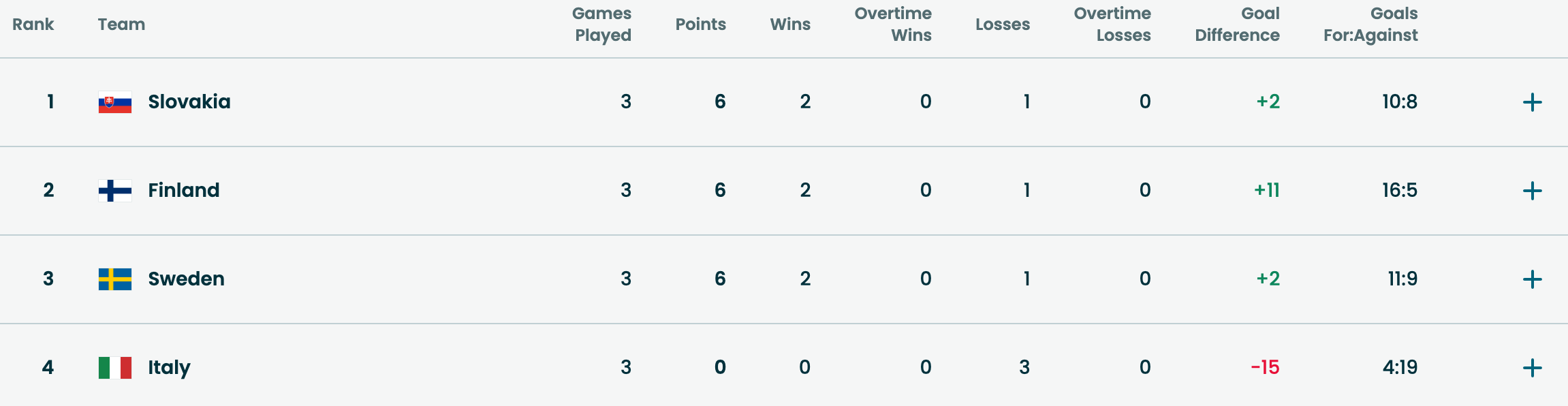
So, how did a Finland victory over Italy move Sweden from first to third in the group?
Crucially, that third Slovakia created separation in a sub-category of goal-differential between the teams, giving Slovakia the edge in that most important aspect of the tiebreaking procedures: Goal-differential exclusively in the games between teams tied in points—which leaves out goals scored in games against Italy.
And if you recall, those three games ended thus:
Slovakia 4, Finland 1
Finland 4, Sweden 1
Sweden 5, Slovakia 3
Thus, the goal differential for the three teams in just those three games ended up as follows:
Slovakia: +1
Finland: +0
Sweden: -1
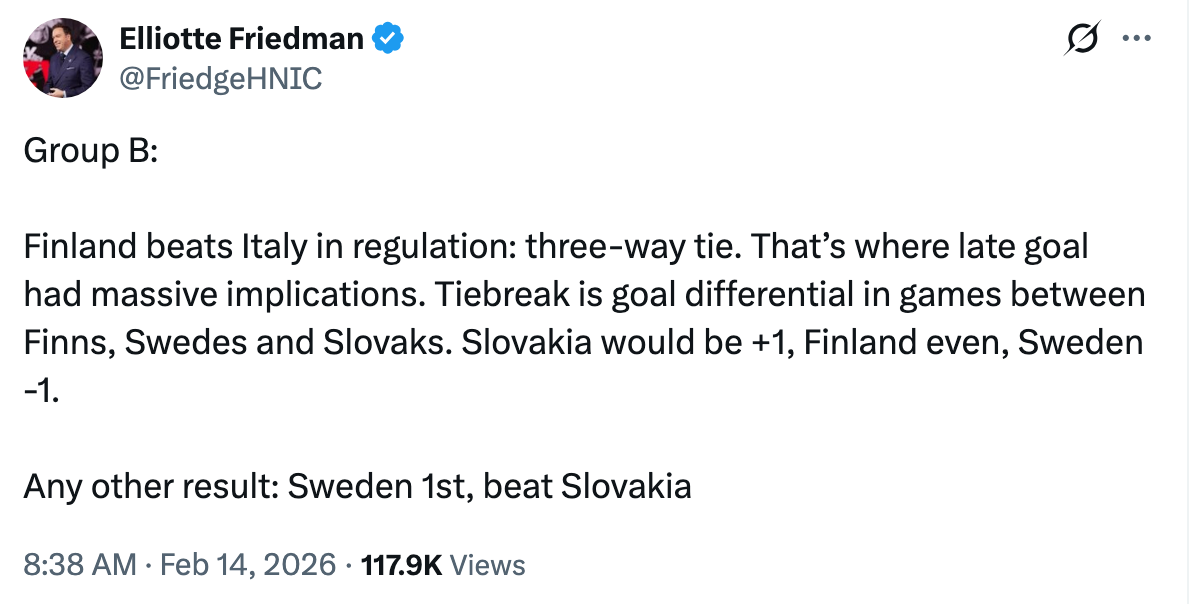
All that to say that if Sweden hadn’t allowed that final goal to Slovakia on Saturday morning, then all three teams would have finished with the same +0 goal-differential in their three games between each other, leading to the next tiebreaker: Total goals scored.
We never got to that point, thanks to Dvorsky’s goal. But even if we had, it probably wouldn’t have made Finland’s contest against Italy any less ugly.
Because even without the top spot in the group to play for, Finland still had something to play for: the 4th-place finisher among all 12 teams in the tournament still receives a bye through the first elimination rounds. And while Finland couldn’t outright clinch that 4th-place finish today, they certainly did every possible thing they could in pursuit of it, stomping Italy into a fine powder with an 11-0 defeat.
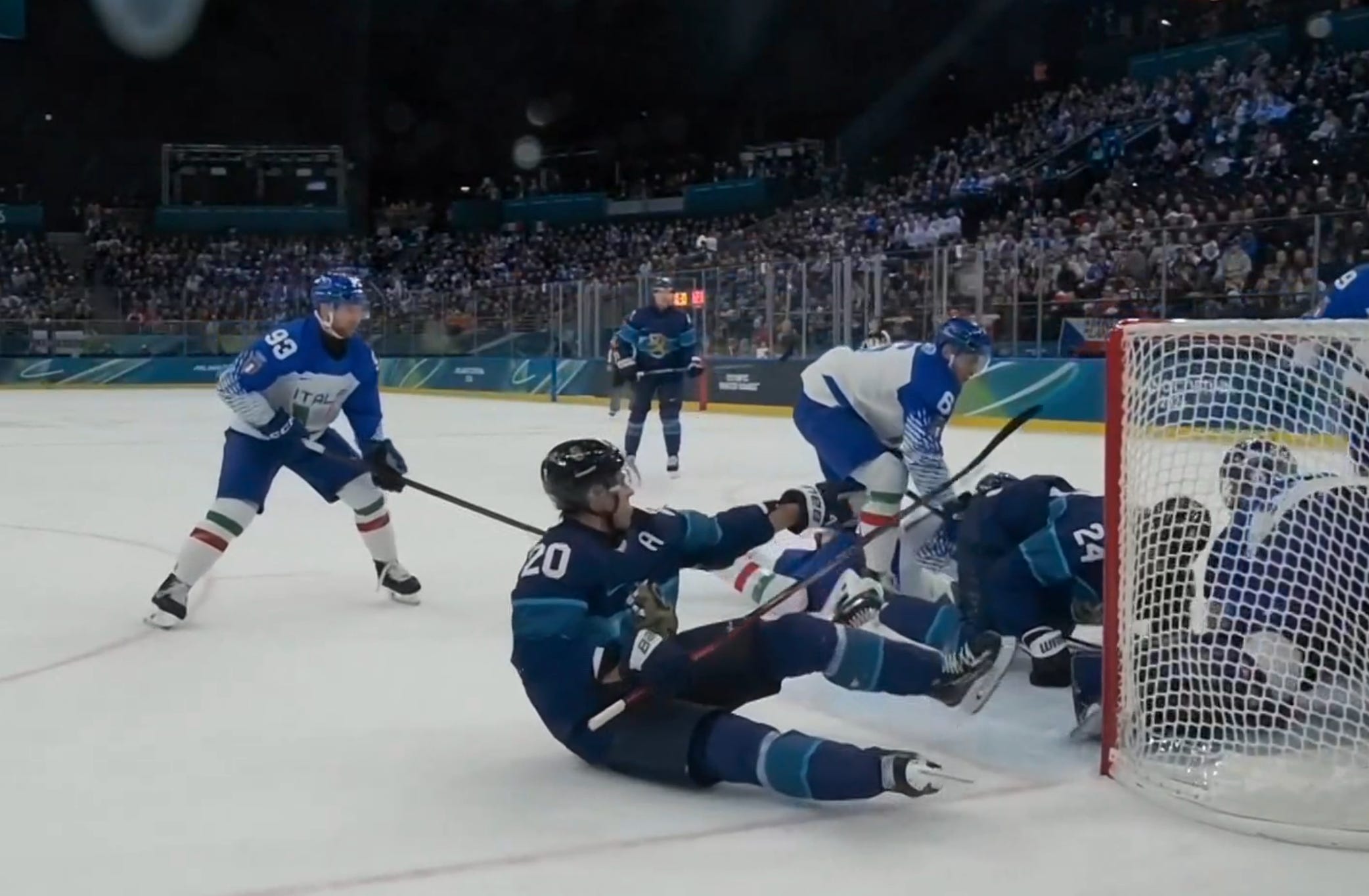
We’ll get into the implications of that win in a moment, but as for the Finland/Italy game itself, it was exactly what that scoreline suggests. The Finns were businesslike and unrelenting for all 60 minutes, though Juuse Saros did have to make a couple of big stops. Nevertheless, the goals just kept coming, and Damian Clara was mercifully pulled after 40 minutes.
The most noteworthy things from a blowout game today were as follows:
Finland set the record for most shots in a game, with 62.
Mikko Rantanen had three assists but zero goals, and was stopped on a breakaway.
Miro Heiskanen scored a goal from the blue line on a quick snap shot with Roope Hintz screening in front.
Despite the score, Hintz, Eeli Tolvanen, and Esa Lindell all managed to score zero points in an 11-0 game, which I personally think deserves a trophy of some kind.
The forward lines were juggled in part due to Anton Lundell being out with an illness for the game. Mikael Granlund was moved down to center a third line, while Tolvanen was moved up with Hintz and Rantanen.
Granlund nearly pulled off an all-timer of a goal in the third period with multiple gorgeous dekes through defender’s skates, only for his lunging attempt at tucking the puck around the goaltender to get stopped by the right pad.
The Tolvanen-Hintz-Rantanen line was fine, but they didn’t score a goal, which has been a weird sort of undercurrent for Dallas fans to watch in this tournament: None of the Stars players at the tournament has more than one goal so far.
Davide Fadani made perhaps the best save of the tournament so far (after coming into the game in relief!) with an unbelievable glove stop on Teuvo Teravainen that came after a sharp spinaround pass from Granlund through the low slot.
Joel Kiviranta scored two goals after getting into his first game of the tournament, immediately vaulting over both Hintz and Rantanen (the latter of whom has piled up assists, but has only scored a goal into an empty net in three games).
Overall, you’d have to think seeing a true four-line attack was a relief for Finland, whose initial stumbles against Slovakia surely sting a bit less now that 4th place looks all but certain. They may have started slowly, but they’ve now put themselves in a position to make the semifinals without having to do anything spectacular, and that’s an accomplishment in itself.
Okay, so what does Finland’s path forward look like?
Well, Finland’s most likely competition for that 4th seed after the preliminary rounds is probably Switzerland, who will, like Finland, enter their final game of the prelims sitting on a goal differential of zero. Switzerland will face a tough opponent in Czechia on Sunday, so if Finland’s preposterous +11 goal-differential holds up, they will likely finish with that critical first-round bye.
But given how critical goal-differential is at this point, don’t be surprised to see the Swiss go all-out tomorrow in pursuit of a similarly outrageous scoreline to Finland/Italy today.
That will be much tougher, however, because of how tough an opponent Czechia is likely to be. Additionally, Switzerland lost Kevin Fiala to a devastating lower-body injury against Canada on Friday after he got tangled up with Tom Wilson, and Fiala is scheduled to have surgery. He has been ruled out for the tournament, as well as for the NHL season per ESPN’s Greg Wyshynski, which is very tough news for the Los Angeles Kings.
So, a Fiala-less Swiss team will face Czechia on Sunday in their final game needing a whole bunch of goals to close the gap. Or, in theory, Czechia could do the same, but with a -2 differential of their own, they’d need an even bigger victory over Switzerland than Finland got today, which seems, ah, unlikely.
Oh, and by the way: If Finland do finish as the 4th seed, then Finland’s opponent in the quarterfinals will be whoever ends up being the 5th seed…assuming that seed wins their playoff game against the last-place team. Here’s how those matchups work, per the tournament website:
1D (probably Canada) – Winner 8D/9D
2D (probably the USA) – Winner 7D/10D
3D (probably Slovakia) – Winner 6D/11D
4D (probably Finland) – Winner 5D/12D
And if you think determining the 5th through 12th seeds is a straightforward formula, think again. Per the tournament rules, a 3rd-place team in a group cannot be a higher seed in the next round than a 2nd-place team in a group, even if the 3rd-place team amassed more points.
Why does that matter? Well, because it means Sweden can’t end up finishing the preliminary round as any higher than 7th, no matter what. And it also means the Swedes won’t face Finland in the quarterfinals, which is a shame for all of us viewers.
Given the weaker nature of Group C, Finland might face whichever of Switzerland or Czechia defeats the other in their matchup tomorrow. But there is also a crazy world in which Switzerland-Czechia goes to overtime tomorrow, meaning neither team gets to 6 points. And if Latvia were then to defeat Denmark in regulation tomorrow, they could end up being the 5th seed.
Regardless, Finland’s big win today makes it likely that the Finns will be able to avoid all of Sweden, the USA, and Canada until the semifinal rounds, which is pretty much the most ideal path any team could have asked for, going into this tournament.
Still, some upsets are always possible before the preliminary rounds finish up this weekend, and even more so when it comes to Olympic hockey. Because, regardless of how tricky it can be to follow the rules at times, the Olympics remain, as ever, just the best.
the fantastic content for the games is much appreciated.
Thanks for your work. This is now semi-clear to me.