
Mikko Rantanen's Wild Ride of a 2025-26 Season
There was a lot of everything in Rantanen's game this year

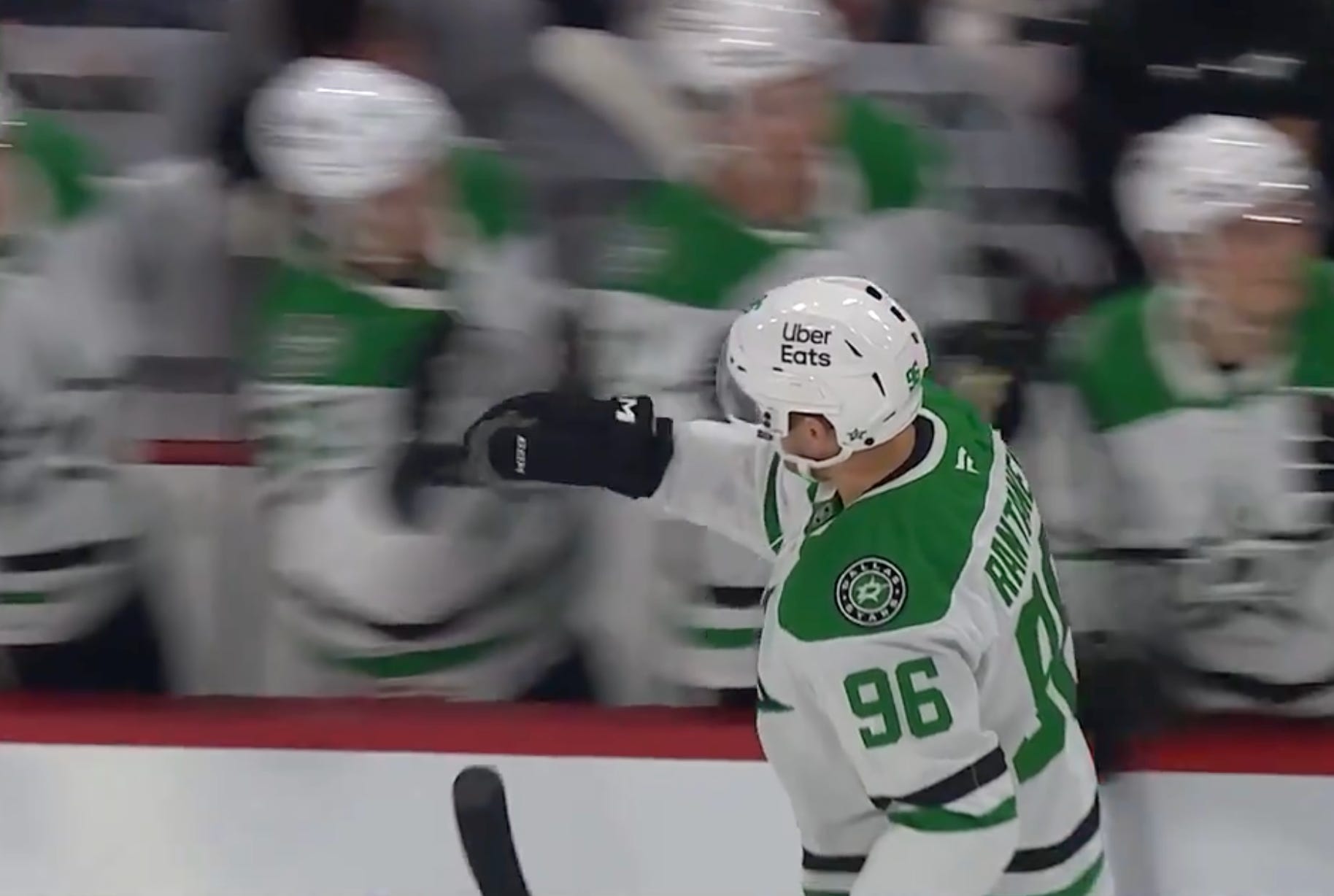
When the Stars sold the farm to acquire Mikko Rantanen, they knew exactly what they were doing. For Jim Nill in particular, the idea of sending away Logan Stankoven and two first-round draft picks—after only having traded away two first-round picks across the first 12 years of his Stars tenure— would have been unthinkable in almost any conceivable context.
Then March of 2025 rolled around, and the inconceivable happened: one of the best players in the NHL suddenly became available. So the Stars began grinding away to see if they could work out a deal with Carolina while also signing Mikko Rantanen to a long-term extension. They would end up doing that.
Fast forward to today, and Rantanen has pretty much been everything the Stars could have hoped for. If you can believe it, Rantanen’s seven points in six games against Minnesota this spring (while playing with a torn MCL) was actually a tick behind his historical pace, albeit slightly.
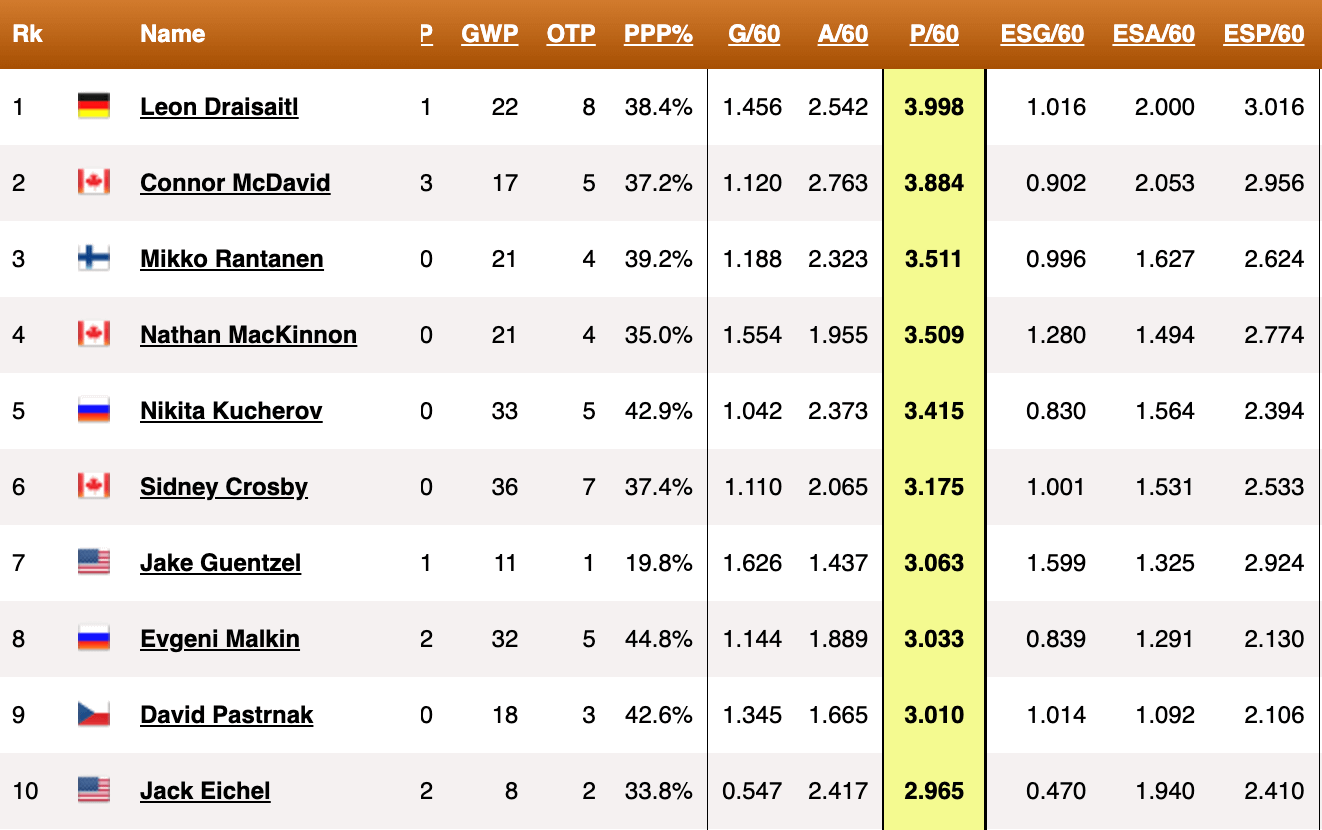
Including both his postseasons in Texas, Rantanen’s 1.2 points per playoff game across 29 postseason games with the Stars is right on track with his career average in Colorado—a points-per-playoff-game average that now happens to be better than every other active player in the NHL, save the two Hart Trophy1 guys up in Edmonton. Here’s a chart to that effect, if you like:
Rantanen’s performance this spring was less legendary than last year’s, though the injured knee was clearly a factor. Rantanen’s scoring came almost entirely on the power play, when more time and space afforded him the ability to use his elite vision and playmaking, even if he didn’t have the power and separation to do the same at five-on-five. Of his seven points this postseason, six came on the power play, including this beautiful assist to Matt Duchene in Game 2:
The underlying numbers pretty much told the same story you’ve been hearing for months now: Rantanen and his linemates were heavily outscored at five-on-five, along with too many other forwards—pretty much everyone except the Duchene line, in fact.
(The power play was pretty incredible, though.)
But you know how the Minnesota series went, so let’s move on to Rantanen’s first full regular season in Dallas. Or at least, 64 games of it. The Stars’ $12 million winger wound up missing time due to an injury and a one-game suspension, but the superstar winger still managed to put up 22 goals and a team-leading2 55 assists in just 64 games, many of which came early in the season when a team in transition badly needed them. He also managed to log a career-high 93 minutes in penalties, though a full 37 of those came in two games, when he was given match penalties against the Islanders and the Flames for reckless hits on Alexander Romanov and Matt Coronato just four days apart.
Rantanen’s stick fouls were the main culprit outside of the match penalties, as his frustration often got the better of him—something that’s been a part of his game for a while now. His penalty minutes got mostly back under control after those two harrowing incidents, but he did add a dozen more PIMs in the postseason against Minnesota to edge Jamie Benn’s eight penalty minutes for the ignominious team lead. While Dallas’s special teams certainly won the battle in that series, Rantanen didn’t go about it the easy way.
Rantanen’s MCL injury at the Olympics (which appeared to happen when Tom Wilson fell on his leg) was the turning point of his season. Rantanen had just two goals and six assists in the ten games he played afterward, and while he still managed to keep things going on the power play against Minnesota in April—a feat more impressive than the result of the series allowed most fans to truly enjoy—he simply wasn’t the same player after returning from Milan, and it showed. As Jim Nill said in his end-of-year presser, Rantanen simply wasn’t able to execute some of his go-to moves, particularly in the corners. Losing one of your key abilities will mess with even the best players, and it did.
The skating numbers bear that out, too. Rantanen was routinely hitting 21 MPH+ speed bursts in the first half of the season, but he barely managed to get above 20 MPH more than a handful of times in the entire series against Minnesota, when you’d expect desperation to be at its height. Compare those numbers to last year’s playoffs, and you see a different, faster player when both knees are fully connected. That’s the player Dallas will be hoping to get back in September.
As for the pre-Olympics portion of this year, perhaps one of the first moments that cemented just what Rantanen already means to this team came on November 11, when the Stars were in Ottawa. I was at that game, and the Stars had clearly been the second-best team for most of the night. They hadn’t been able to get anything going against the Senators, right up until Rantanen attacked a bobbled puck at the point in the second period. That’s when Jason Robertson found Rantanen streaking up the ice for a breakaway, and Rantanen didn’t mess around with it, snapping it through the five-hole like elite players confidently do.
That game sticks in my memory for a lot of reasons, but particularly because it was the classic example of your best player scoring a big goal at a critical juncture of the game and turning things around as a result. Every bit the equivalent of a big save in a tight game, that goal gave the Stars life in a similar (if less critical) way as Rantanen’s goals against Colorado did in his first playoff run in Dallas. A monkey-off-the-back goal from Jason Robertson in the third period would go on to tie the game in Ottawa before Roope Hintz won it in overtime, but it all started with that first goal by Rantanen.
The big winger also did some things that only a handful of active players can pull off, including this dynamite spinaround backhand goal against Vancouver later that same November:
Really, Rantanen’s wide skillset was on full display for his first 50 games, and that included not only carrying much of the offense early in the year when the team needed it, but also jump-starting players who ended up carrying it later themselves. Specifically Matt Duchene, whom Rantanen fed for this beautiful tap-in in mid-December:
And again, in late January:
Wyatt Johnston’s record-setting power play goal total was an achievement that Johnston fully earned, but the presence of Rantanen really does force opposing defenders to keep themselves honest, and that means more space for everyone else.
You might not remember it, but Rantanen actually began the season playing with Roope Hintz and Jason Robertson for decent stretches in the first few games. Rantanen even played a few games in late October with Tyler Seguin(!) centering him and Sam Steel, before Rantanen was paired with Wyatt Johnston for what turned out to be the rest of the year.
The left winger on that Johnston-Rantanen duo rotated pretty constantly, with everyone from Sam Steel and Jamie Benn to Matt Duchene and Justin Hryckowian getting some time up there. Jason Robertson’s time up with Johnston and Rantanen was the most statistically dominant of anyone, as you’d expect, but Justin Hryckowian’s time with the duo wasn’t far behind him, which one might not have expected. Both trios won their ice time with the same 5-1 goal-differential, and the Hryckowian combo’s 58% expected goals share wasn’t far off the 21-53-96 trio’s 61%. Little wonder that Gulutzan opted to spread Robertson and Rantanen across the top two lines, primarily loading them up together for key moments or stretches when the Stars needed a goal late.
When it comes to the fancier numbers, Rantanen doesn’t drive play with puck possession the way wingers like Robertson or Kucherov do. Instead, Rantanen is all about getting the puck north and going to work against uncomfortable defenders, where his lethal offensive skill makes him a terror to handle. That’s partially why his average shot metrics in Dallas have belied his fantastic results. To put it in statistical terms: Rantanen has historically outperformed his expected goals numbers.
Rantanen put up a prima facie worrisome 46% xGF3 after arriving on Pete DeBoer’s team for the home stretch, but he won his minutes 15-9 in terms of goals (62.5%). This year under Gulutzan, Rantanen was a break-even 50% xGF player on a Stars team that spent much of the season eschewing the type of play that enhances those metrics. Even still, Rantanen won his minutes handily, with Dallas outscoring the opposition 46-32 (or 59%) across his 64 games of the regular season. Again, this is what he does.
That’s not to say that it’s good for players to have lower xG numbers, and I’d expect that we see some system adjustments this fall that result in some improvements in the neutral zone, as Glen Gulutzan alluded to at season’s end. Rantanen is a specific type of superstar player, and that comes with challenges coaches have to figure out—whether it’s figuring out the right linemates, living with his defensive play, or killing off an ill-advised penalty. But when those things do get figured out, there are few players more fun to watch.
All that to say, the metrics for Rantanen don’t concern me too terribly just yet, because Rantanen isn’t just any player. He was one of the big reasons that Dallas was able to put together the season they did, even with the growing/adjustment/system pains they went through. There’s a reason you get a player like Rantanen at almost any cost, and the Stars have seen those reasons proven valid, even if the team didn’t win the end-of-season tournament.
Rantanen has earned a “W” grade for his season, because like Mr. Toad at Disneyland4, he went on a wild ride and was briefly held accountable for getting too reckless. (Here endeth all parallels to The Wind in the Willows.)
If Rantanen was assigned any offseason homework, I’d imagine it’s pretty simple: Get that knee healthy, and vow to take fewer penalties. Other than that, there’s every reason to expect him to continue to be the force of nature the Stars knew themselves to be acquiring. In fact, he might even have more to give, if his chemistry with Johnston and Hryckowian can pick up where it left off. It’s always nice when great players live up to their lofty expectations.
Side note: I had Connor McDavid first on my Hart ballot this year as well, but I’ll save the awards voting discussion for another time.
Mikko Rantanen spotted everyone else 18 games, and he still finished atop the helpers hierarchy. That’s not bad.
I try to stick with Natural Stat Trick for 5v5 Expected Goals numbers just for consistency, though I’m sure Evolving Wild or MoneyPuck might have slightly different numbers.
I never did understand this ride, by the way. Not only is much of Mr. Toad’s Wild Ride not even based on the original book (which is incredible), but it’s also not even based on the Disney adaptation itself! Like, for real, Mr. Toad at one points gets in a car accident and/or runs into a train head-on due to apparent drunk driving and finds himself in Hell. This is just one of many great and inexplicable liberties taken with the source material(s). I hope they never change it.
If Dallas can get everyone back healthy and if they can stay healthy it’s hard to not be optimistic about next season.
Unfortunately not everyone will be back due to salary cap issues, so next year rests entirely on Jim Nill. No pressure!